The Degree That Used to Open Doors Is Starting to Feel Like One That Closes Them
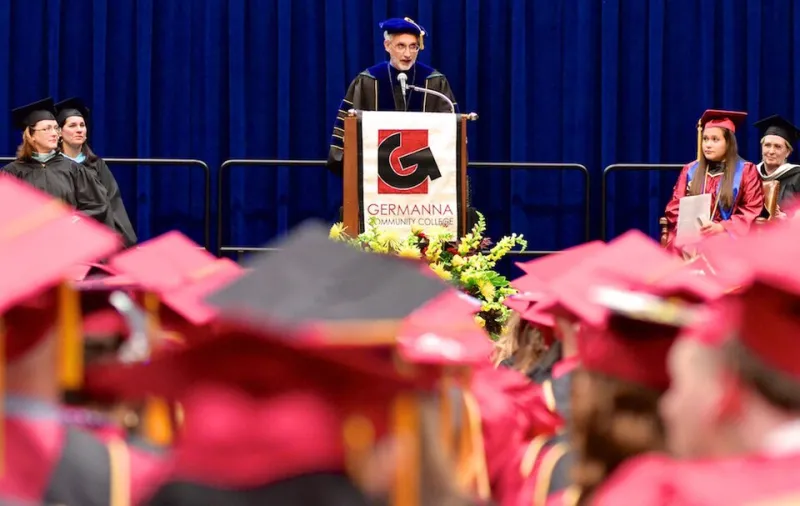
Photo: Germanna CC, CC BY 2.0, via Wikimedia Commons
In 1976, the average annual tuition at a four-year public university in the United States was around $617. Adjusted for inflation, that's roughly $3,300 in today's dollars. The federal minimum wage that year was $2.30 an hour. A student working full-time over a summer — say, twelve weeks at forty hours a week — could earn about $1,100. That covered nearly two full semesters of tuition with money left over.
Now do the same math with today's numbers. Average in-state tuition at a public university runs about $10,940 per year. Federal minimum wage is $7.25. That same summer job, assuming a student could actually work full-time for twelve weeks, generates around $3,480. That covers about a third of one year's tuition — before books, housing, fees, or food.
Something shifted. And it shifted hard.
When a Degree Was Almost a Sure Thing
For the generation that came of age in the postwar decades through the late 1970s, college carried a near-mythological promise. You went. You studied something — almost anything. You graduated. And then the economy, which was expanding at a pace that seems almost hallucinatory by modern standards, absorbed you into a professional class that rewarded your credential with stability, benefits, and a pension that would eventually let you retire with dignity.
The degree itself was almost secondary to the act of getting it. Employers used a bachelor's degree as a broad signal of capability and follow-through, not as evidence of specific skills. A history major could end up in insurance. An English graduate could find themselves managing a bank branch. The market was loose enough, and the supply of graduates modest enough, that the credential opened doors that hadn't yet been narrowed to fit a particular shape.
Tuition was low partly because state governments heavily subsidized public universities — in some states, covering more than 70 percent of the cost of instruction. The idea that higher education was a public good, worth investing in broadly, was not controversial. It was policy.
The Slow Unwinding
The transformation didn't announce itself. It accumulated over decades through a combination of forces that each seemed manageable in isolation but were collectively catastrophic.
State funding for public universities began declining in the 1980s and has never recovered. As governments pulled back, universities compensated by raising tuition — and then kept raising it, year after year, at rates that consistently outpaced inflation. Between 1980 and 2020, the cost of college increased by more than 1,200 percent. Median household income roughly tripled over the same period.
The federal student loan system, originally designed to make college accessible, paradoxically helped fuel the price spiral. When students can borrow essentially unlimited funds to cover tuition, universities face less market pressure to control costs. The result is a system where the availability of debt has become a mechanism for extracting wealth from people who were told that taking on that debt was the responsible, forward-thinking thing to do.
Total student loan debt in the United States now exceeds $1.7 trillion. About 43 million Americans carry it. The average borrower owes somewhere around $37,000 — a figure that sounds manageable until you consider what the job market looks like on the other end.
The Job Market Didn't Hold Up Its End
Here's the part of the story that doesn't get told often enough: the credential inflation that drove millions more Americans into college over the past forty years has simultaneously devalued the thing they were chasing.
As bachelor's degrees became more common, employers began requiring them for jobs that previously didn't demand them — a phenomenon economists call degree inflation or credentialism. Administrative assistants, retail managers, and customer service supervisors now frequently see degree requirements on job postings for roles that, a generation ago, would have been filled by high school graduates with on-the-job training.
The result is a strange inversion: more people than ever have degrees, but the degree itself carries less distinction than it used to. And many of those degree holders are carrying five-figure debt into jobs that don't pay enough to service it comfortably.
What a Generation Is Rethinking
The backlash has been building for years, and it's starting to reshape actual behavior. Enrollment at four-year universities has declined in several consecutive years. Trade school enrollment is rising. Coding bootcamps, apprenticeship programs, and employer-sponsored training are attracting serious attention from young people who are doing the math and not liking the answer they get.
Major American employers — Google, Apple, IBM, and others — have publicly dropped degree requirements for many positions. Some states have eliminated degree requirements for significant portions of government jobs. The idea that a bachelor's degree is the only legitimate path to a professional life is losing its grip in ways that would have seemed radical a decade ago.
None of this means college is worthless. The earnings premium for degree holders remains real, particularly for certain fields. The social and intellectual experience of higher education has value that doesn't show up cleanly in salary statistics. And for professions like medicine, law, and engineering, there's no meaningful alternative path.
The Shift We're Still Living Through
What's changed isn't the idea that education matters. It's the assumption that one specific, increasingly expensive form of it is automatically worth whatever price is being charged.
The generation currently entering adulthood is the first to grow up watching older siblings and cousins struggle under debt loads that their parents didn't carry and couldn't fully comprehend. That lived experience is producing a skepticism that no amount of college marketing can easily counter.
The institution hasn't collapsed. But the automatic faith that surrounded it — the reflexive belief that a degree was a ticket you simply had to buy — is dissolving. And in its place, a harder, more honest question is emerging: worth it for whom, studying what, at what price, and compared to what alternative?
That's not cynicism. That's a generation doing math that previous generations never had to do.