Your Insurance Agent Knew Your Kids' Names — Now an Algorithm Knows Your Brake Habits

Your Insurance Agent Knew Your Kids' Names — Now an Algorithm Knows Your Brake Habits
Somewhere in a filing cabinet in a mid-century American suburb, there's a carbon-copy insurance policy with a handwritten note in the margin. Something like "Good family. Father drives careful. Discount applied." That's not a joke. That's how it worked.
For much of the 20th century, buying auto insurance was less like purchasing a financial product and more like joining a local institution. Your agent wasn't a chatbot or a call center in another time zone. He was Bob — the guy from your church, the one who coached Little League on weekends, the one who knew your oldest had just gotten his learner's permit and quietly adjusted your premium without making a big deal of it.
 Photo: Little League, via res.cloudinary.com
That world is gone. And the replacement is something Bob would barely recognize.
The Corner Office With the Handshake
Through the 1950s and into the 1970s, independent insurance agents were fixtures of American community life. They set up shop on Main Street, kept paper files on every client, and built their businesses almost entirely on personal reputation. A recommendation from a neighbor or a relative was worth more than any advertisement.
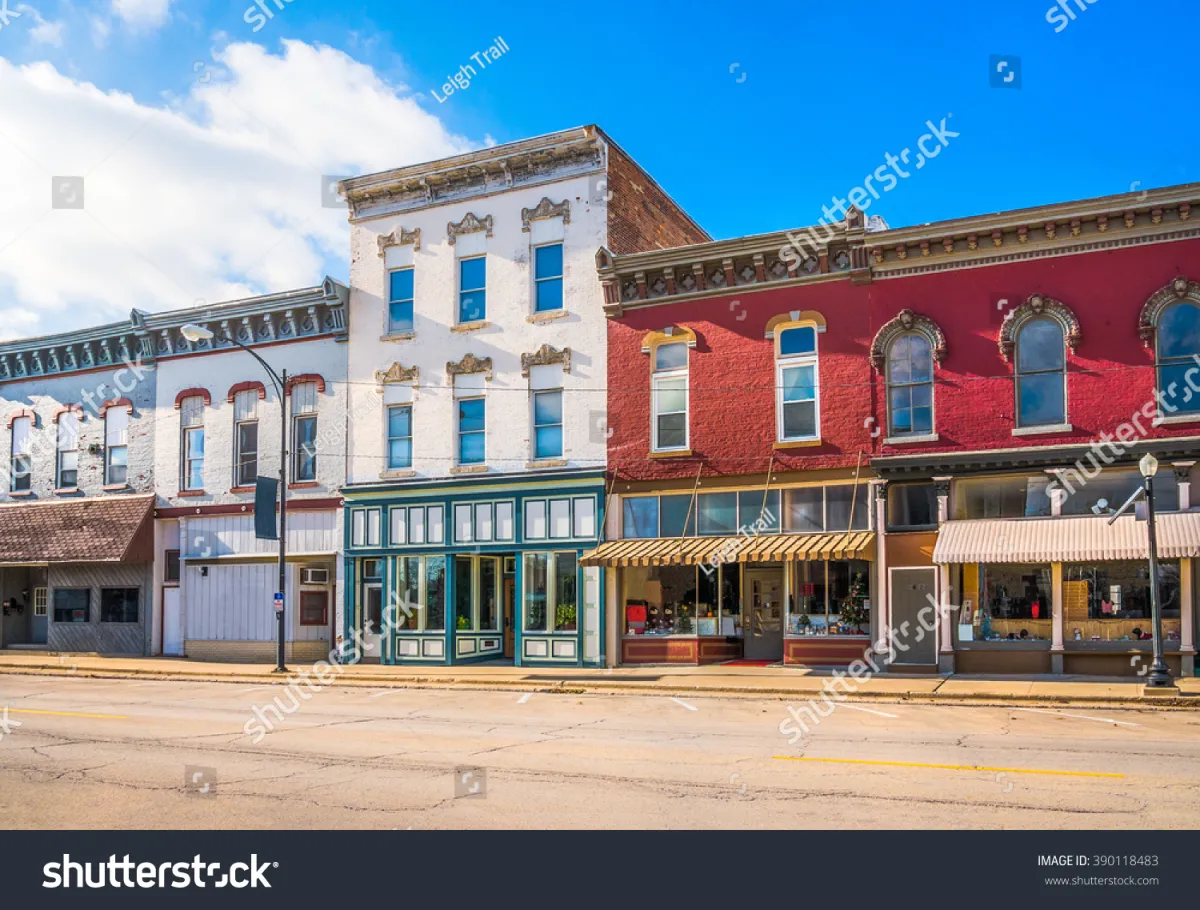 Photo: Main Street, via www.shutterstock.com
The transaction itself reflected that intimacy. You'd sit across a desk, describe your car, your commute, maybe your driving record if you were being honest, and the agent would write up a policy that felt tailored — because it was, by hand, by a human being who used judgment alongside actuarial tables. Payment often came by check, mailed monthly, sometimes dropped off in person. If you had a rough year — a fender bender, a job loss — you could walk in and have a conversation about it.
Protection, in that era, was genuinely personal. It was built on the idea that the person insuring you had something at stake too: their reputation in the same community where you lived.
The Numbers Took Over
The shift didn't happen overnight. Through the 1980s and 1990s, large national carriers began outcompeting local independents on price, backed by better data modeling and economies of scale. Television advertising turned insurance into a brand game — and suddenly the gecko and the good neighbor were more recognizable than the actual agent down the street.
By the time the internet arrived, the transformation accelerated into something almost unrecognizable. You could now get five competing quotes in the time it used to take to find parking outside Bob's office. That was genuinely good news for consumers in a lot of ways. Prices got more competitive. Coverage options expanded. Switching carriers no longer required an awkward in-person conversation.
But something quieter was happening underneath all that convenience. The basis for calculating your rate was shifting away from who you were and toward what you'd done — and eventually, toward what you were doing, in real time.
The Telematics Turn
Here's where things get genuinely strange by mid-century standards. Today, major insurers offer programs — sometimes called telematics, sometimes dressed up with friendlier brand names — that monitor your actual driving behavior through a smartphone app or a plug-in device. How hard you brake. How fast you take corners. Whether you're driving at 2 AM on a Friday. How many miles you log each week.
The pitch is straightforward: drive well, pay less. And for careful drivers, the math can actually work out. But consider what's been exchanged. Your rate is no longer a product of a human conversation. It's the output of a system that has logged thousands of data points about your behavior behind the wheel — data you generated, data you may not fully understand, processed by models you'll never see.
Credit scores, ZIP codes, even your level of education factor into rates in many states. Your premium isn't really about you anymore. It's about the statistical profile you most closely resemble.
More Coverage, Less Connection
To be fair, the modern system delivers things the old one couldn't. Coverage is genuinely more comprehensive. Claims can be filed from your phone in a parking lot. Fraud detection has improved. Disputes have formal escalation paths that didn't exist when everything ran on a handshake and a carbon copy.
And let's not romanticize the old model too much — it had real blind spots. Discrimination in underwriting was widespread and often invisible. The "personal touch" sometimes meant that who you knew mattered more than fairness. A Black family moving into a newly integrated neighborhood didn't always get the same warm treatment from the local agent as their white neighbors did.
Progress is real. The modern system, for all its impersonality, is more transparent in some ways and more regulated in others.
What Got Lost in the Spreadsheet
But there's a specific kind of loss worth naming. When protection becomes a product calculated by an algorithm, the human dimension of risk — context, circumstance, the fact that you're a person and not a data cluster — gets compressed into a number. You can't call the algorithm and explain that the hard brake it logged was because a kid ran into the street. You can't ask it for a little grace while you get back on your feet.
Bob might have given you that grace. Not out of charity, but because he knew you. Because you existed in his world as a full human being, not a risk profile.
The world shifted, as it tends to do. We got efficiency, portability, and price competition. We gave up the guy who knew your dog's name and adjusted your premium because he trusted your word.
Whether that's a good trade probably depends on which side of the desk you were sitting on.