The Blue Dot Never Saw This Coming: How America Found Its Way Before GPS
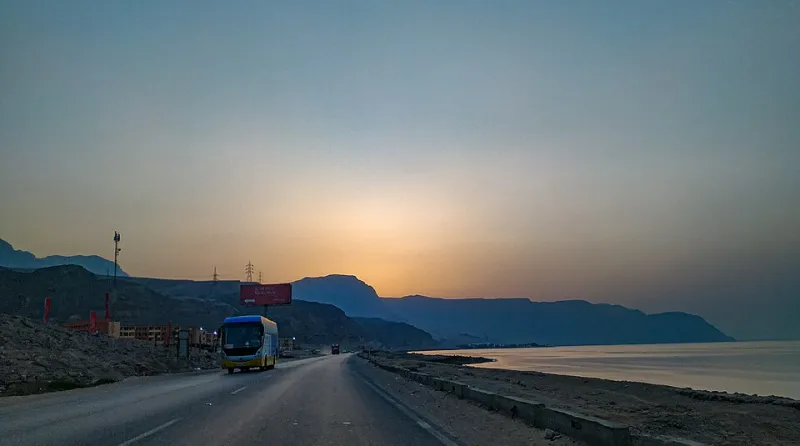
Photo: Mahmoudehab416, CC BY-SA 4.0, via Wikimedia Commons
It's summer, which means millions of Americans are about to drive enormous distances guided entirely by a soothing voice on their phone that will reroute them around traffic in real time. It's genuinely one of the great conveniences of modern life.
It's also the reason nobody will come home with the story about the roadside diner in the middle of nowhere that turned out to be the best meal of the trip. Because that story was almost always a detour story — and detours are something the blue dot has nearly eliminated.
The Art of the Fold
Start with the map itself. Before GPS, a family road trip began with a paper map — a Rand McNally road atlas or a state map picked up at a welcome center — and using one was a genuine skill. You'd unfold it across the front seat, and then spend the rest of the trip trying to refold it along the original creases, a task so famously impossible it became a running joke in American culture.
The navigator was a real job, usually held by whoever rode shotgun, and a good one was treasured. You'd trace the route with a finger, count the two-lane miles between towns, and call out turns ahead of time: "Exit after the Texaco. Not this one — the next one."
TripTiks and Toll Booth Prayers
For the truly prepared, there was AAA. You'd go to your local office and request a TripTik — a custom spiral-bound route guide, assembled by hand, with your exact route highlighted in marker page by page, annotated with road construction zones, speed traps, and gas stations. It was personalized navigation, produced by a human, delivered in a cardboard sleeve. It was wonderful, and it took about a week to get.
If you hadn't planned that far ahead, there was the fallback: pull into a gas station and ask. Attendants — yes, they pumped your gas too — were the living navigation system of mid-century America. "Take 40 west till you hit the Hardees, then cut north" was a real set of directions, and you wrote it on a napkin and hoped.
The Genuine Risk of Being Lost
Here's the thing that's hard to convey to anyone under about thirty: you could really, truly be lost. Not "recalculating" lost. Lost lost. Wrong-exit lost, no-cell-signal lost, it's-getting-dark-and-we-haven't-seen-a-town-in-an-hour lost.
Families got turned around outside St. Louis and ended up an hour in the wrong direction. And because they were already in the wrong direction, they stopped at a diner they never would have found otherwise — the one with the pie that got mentioned at every family gathering for the next thirty years.
That's the uncomfortable truth about old-school navigation: the stress and the serendipity were the same mechanism. Being lost was the price of admission, and the unexpected stop was the refund.
Now Everything Is Optimized
Today the trip is a solved problem. GPS knows the fastest route, flags the slowdowns, and estimates your arrival to the minute. It's safer, faster, and dramatically less stressful — you'll never again circle a strange downtown at 10 p.m. with the kids asleep in the back.
But optimized routes funnel everyone onto the same highways and toward the same exits, where the same three chain restaurants wait. The route you drive to Disney World is the route your neighbor drives to Disney World. Serendipity doesn't survive optimization.
Take the Wrong Exit on Purpose
Nobody's suggesting you throw the phone in the glove box. But there's a case for borrowing a little of the old chaos on your next trip: take the two-lane state road instead of the interstate for an hour. Follow the brown sign for the weird local attraction. Let the navigator in the passenger seat — the human one — pick a stop that isn't on the route.
The blue dot will always know where you are. What it never knew was where you might end up — and that uncertainty, it turns out, is where half the best road trip memories were made.
Fold the map wrong. Miss the exit. See what the pie tastes like.