Running Five Minutes Late Wasn't an Option — and Honestly, We Were Better for It
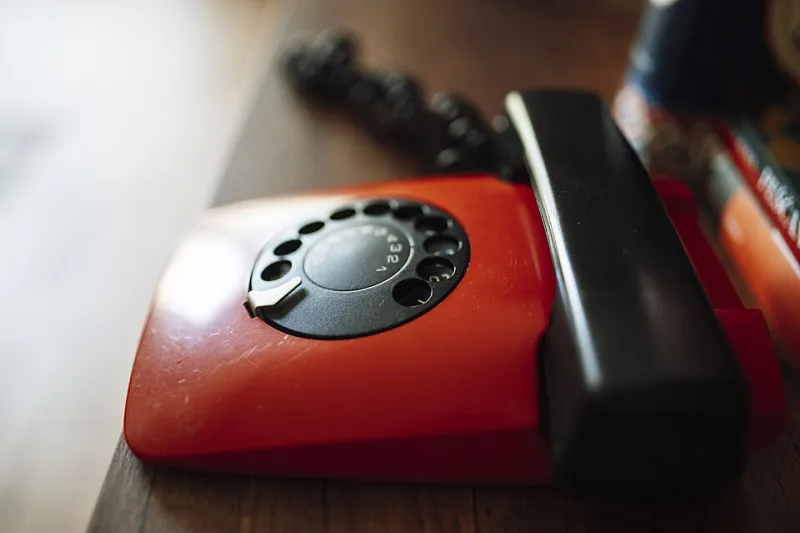
Photo: Shixart1985, CC BY 2.0, via Wikimedia Commons
Here's a scenario that used to be universal and now sounds almost like science fiction: you arranged to meet a friend at a diner at 7:30 on Saturday. You had one phone number — theirs, or their family's. You left the house at 7:00. And from the moment you walked out the door until the moment you slid into the booth, you were completely, irreversibly unreachable.
If traffic was bad, your friend didn't know. If you got a flat tire, they didn't know. They just waited, wondering, until you showed up — or didn't.
We tend to frame the landline era as a dark age of inconvenience. But there's another way to look at it, and it's this: when you couldn't send an update, you had to actually be on time.
The Commitment Machine
Making plans used to be a bigger deal, structurally speaking. You couldn't fire off a text from the couch. You called, you talked — often to a parent or roommate first — and you committed. Once the plan existed, it had weight. Backing out required another phone call, an actual conversation, a real explanation delivered in real time to a real human being.
That friction did something remarkable. It made people show up.
The psychology is simple. When a plan is easy to break, it's easy to break. When breaking it costs a phone call where you have to hear someone's voice while you cancel, you think twice. The old system was, without anyone designing it that way, a commitment-enforcement mechanism.
The Eternal Maybe
Now look at the modern landscape. Plans are fluid things, negotiated and renegotiated in a group chat until the original idea dissolves entirely. 'Running 5 mins late' has become a reflex, sent from the sidewalk, requiring nothing of the sender except a thumb.
And the five minutes late? It's rarely five minutes. The ability to send updates has, paradoxically, made lateness painless — and what's painless becomes chronic. Why leave the house on time when you can manage the other person's expectations in real time from your bathroom mirror?
The result is a culture of the soft maybe. People commit with a mental asterisk. Dinner reservations, concert tickets, weekend trips — everything is provisional until the moment it isn't. Nobody is a villain in this story. The tools just made flakiness frictionless, and humans did what humans do with frictionless things.
What We Gave Up
There's a case that constant connectivity made us ruder. But the more interesting loss is subtler: we gave up the small, productive anxiety of not knowing. Waiting at the restaurant, wondering if your friend was okay or just late, taught a kind of patience that has no modern equivalent. And the relief when they walked in — that little spike of gratitude — came from uncertainty we've since engineered out of existence.
There's also the reliability dividend. When everyone knew updates were impossible, everyone built in buffers. People left earlier. People planned better. People treated their word as something that, once given, was expensive to take back.
A Modest Proposal
Nobody wants to give up their phone, and this isn't an argument for it. But there's something worth stealing from the old system, and it costs nothing: occasionally, make a plan you can't amend. Tell someone you'll be somewhere at a time, put the phone in the glovebox, and treat the commitment like the door is already closed behind you.
The old world's greatest feature wasn't the rotary phone or the phone booth. It was that 'I'll be there' was a promise with no escape hatch. Some of that, we could get back — one unreachable Saturday at a time.