Retirement Used to Be a Finish Line. Now It's a Guessing Game.

Photo: Retired_Picnic_at_Otford_Lookout_(6748299401).jpg: Alex Proimos from Sydney, Australia derivative work: Danapit, CC BY 2.0, via Wikimedia Commons
Retirement Used to Be a Finish Line. Now It's a Guessing Game.
Imagine finishing your last day of work — clearing out your desk, shaking some hands, maybe enduring a sheet cake in the break room — and walking out the door knowing, with complete certainty, exactly how much money would land in your bank account every single month for the rest of your life. No spreadsheets. No market anxiety. No wondering whether you saved enough or invested wisely or got unlucky with the timing.
For millions of American workers through most of the twentieth century, that wasn't a fantasy. It was just Tuesday.
The Era of the Guaranteed Check
The defined-benefit pension plan was, for a long stretch of American working life, simply how retirement worked. You put in your years — at the steel mill, the phone company, the school district, the auto plant — and in exchange, your employer committed to paying you a fixed monthly amount from the day you retired until the day you died. Sometimes your spouse kept receiving it after you were gone.
The math was handled by actuaries and professional fund managers. The investment risk sat entirely with the employer. Your job was to show up, do the work, and accumulate the years. The pension was the other end of that bargain.
At the peak of the pension era, roughly half of all private-sector workers in the United States were covered by some form of defined-benefit plan. Add in public-sector workers — teachers, firefighters, government employees — and you had a workforce where a reliable retirement income wasn't a privilege. It was an expectation built into the employment contract.
This wasn't charity. It was compensation, deferred. Workers often accepted lower wages in exchange for the security of knowing that the back end of their career would be taken care of. The pension was part of the deal, as real as the paycheck.
The Year Everything Quietly Changed
In 1978, Congress passed the Revenue Act, which included a small, technical provision buried in the tax code: Section 401(k). It was originally intended as a way for executives to defer a portion of their bonuses into tax-advantaged accounts — a perk for the highly compensated, not a replacement for anything.
Then a benefits consultant named Ted Benna noticed something in the language. He realized the provision could be used to create employer-matched savings plans for all employees. By 1981, the IRS had approved the structure, and companies began rolling it out. They marketed it as an addition to retirement benefits — a nice supplement to the pension.
 Photo: Ted Benna, via cashflowninja.com
It didn't stay supplemental for long.
Employers quickly realized that replacing defined-benefit pensions with 401(k) plans was dramatically cheaper. The math was straightforward: instead of guaranteeing a monthly payment for an unknown number of years, they could make a fixed contribution to an employee's account and wash their hands of the long-term obligation. The investment risk — the uncertainty of whether the money would actually be enough — transferred entirely from the company's balance sheet to the worker's kitchen table.
Through the 1980s and '90s, private-sector pension coverage collapsed. Companies froze plans, terminated them, or simply stopped offering them to new hires. Workers who had spent careers building toward a guaranteed retirement found the rules had changed midgame. And an entire generation of younger workers entered the workforce never having been offered a pension at all — so they had nothing to compare the new system to.
What Workers Inherited Instead
The 401(k) has genuine advantages. It's portable — you can take it with you when you change jobs. It offers individual control over investment choices. For disciplined savers with long time horizons and steady incomes, it can accumulate substantial wealth.
But it came with something the pension didn't: the full weight of financial uncertainty placed on people who were never trained to carry it.
Retirement planning through a 401(k) requires you to correctly estimate how long you'll live, how markets will perform over decades, what inflation will do to your purchasing power, and whether you'll face major healthcare costs late in life. Professional economists and financial advisors routinely get these projections wrong. We handed the same puzzle to factory workers, teachers, and retail managers and told them to figure it out.
The results have been predictably uneven. The Federal Reserve's most recent data suggests that nearly half of Americans approaching retirement age have less than $100,000 saved in retirement accounts. A quarter have essentially nothing. Meanwhile, the wealthiest households — those with financial advisors, higher incomes, and the ability to maximize contributions — have accumulated retirement wealth that would have seemed extraordinary even under the old pension system.
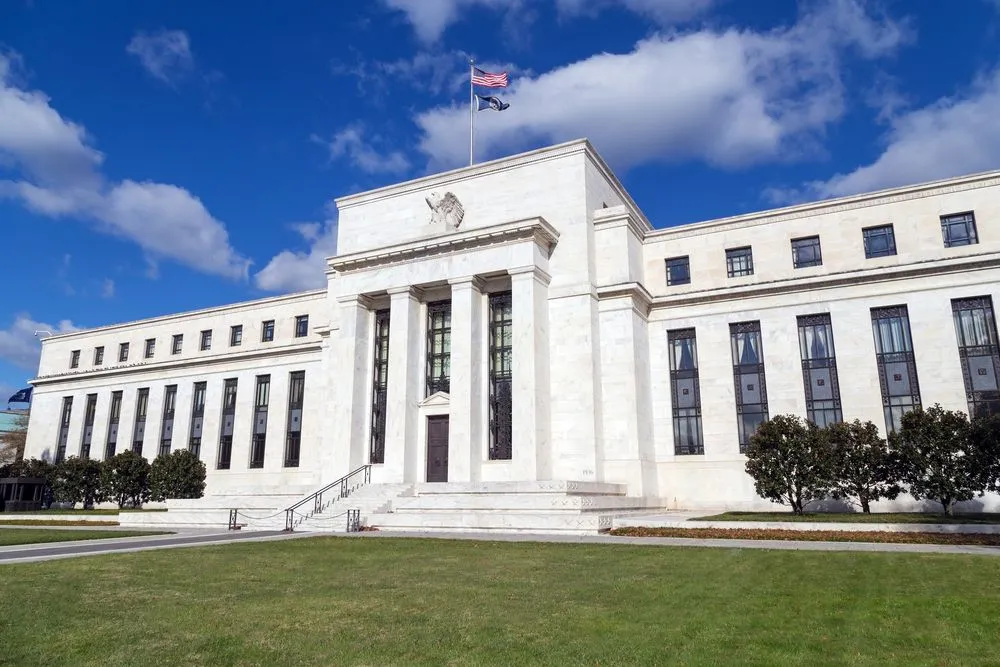 Photo: Federal Reserve, via cdn.britannica.com
The shift from pensions to 401(k)s didn't just change how retirement savings worked. It changed who retirement security was actually available to.
The Transfer Nobody Voted On
What's remarkable about this story is the scale of what moved — and how little public conversation accompanied it. Trillions of dollars in retirement risk transferred from large institutions, which were equipped to manage it, to individual households, which largely were not. It happened through corporate HR decisions, regulatory changes, and market incentives, not through any democratic deliberation about what kind of retirement system Americans actually wanted.
Workers who thought they were building toward a guaranteed future found, sometimes only in their late fifties, that what they actually had was a brokerage account and a hope.
The pension wasn't perfect. Some plans were underfunded. Some companies used them as leverage to extract concessions from workers. The system had real flaws. But it was built on a foundational idea that now feels almost radical: that an employer who benefited from decades of your labor owed you something predictable and lasting in return.
That idea didn't evolve. It was quietly retired — long before most of the workers who depended on it were.