Crank It, Choke It, Pray: Five Machines That Got So Easy They Forgot How to Talk to Us
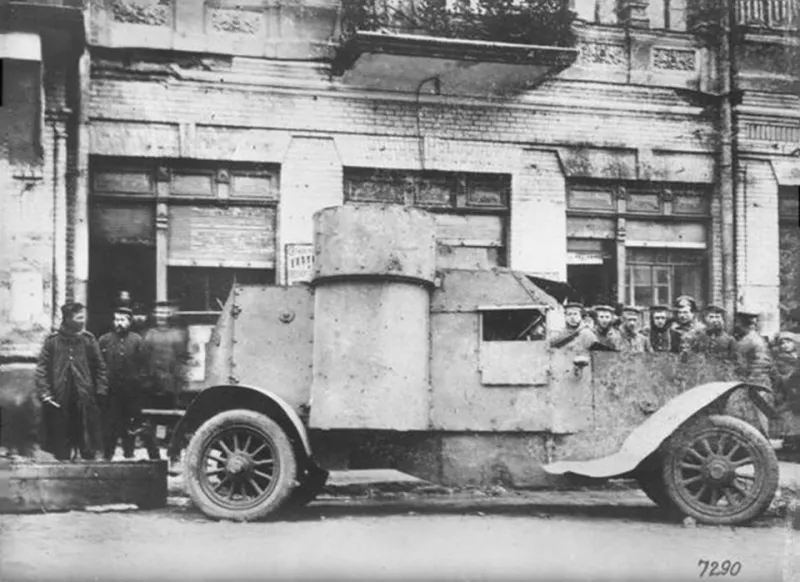
Photo: Unknown photographer, Public domain, via Wikimedia Commons
Somewhere in 1932, on a cold morning in rural Ohio, a farmer walked out to his truck, grabbed a crank handle sticking out of the grille, and gave it a hard yank. If the timing was wrong, that crank could kick back and break a wrist — a genuinely common injury of the era, so common it had a nickname: "chauffeur's fracture."
That's what starting a car used to mean. And it's the opening chapter of a story that repeats across almost every machine in your house: things got easier, and in getting easier, they stopped needing us to understand them.
1. The Car: From Crank to Key Fob
Early automobiles didn't just require skill — they required physical risk and mechanical empathy. Beyond cranking, drivers dealt with choke levers, manual spark advance, and a feel for the engine that you developed the way you develop a feel for a temperamental animal. When the car ran rough, you knew roughly why, because you were part of the starting process.
Today? You walk up with the fob in your pocket, the car unlocks itself, and the engine starts with a button press. Most owners couldn't jump-start their own battery, let alone diagnose a rough idle. The car became a black box — a very reliable, very comfortable black box — and the knowledge faded with the crank.
2. The Washing Machine: A Day of Labor in a Button
Before the automatic washer, laundry was a full-day affair. Heating water on the stove, scrubbing on a washboard, wringing by hand or with a crank roller — and if you didn't feed the wet sheets through that roller carefully, you were feeding the machine your fingers too. It was so hazardous it shows up in old newspaper accounts with grim regularity.
Modern machines weigh the load, adjust the water, and pick the cycle. You press one button. The entire skill of laundry — a genuine, physical, multi-day competency — evaporated in a generation. Nobody misses the washboard. But nobody under forty knows what a wringer is, either.
3. The Camera: When You Got One Good Shot
Film photography had a brutal economy: 24 or 36 exposures, and every click cost money to develop. You composed deliberately. You learned what light did. And when the photos came back from the drugstore a week later, half of them might be ruined — thumbs over the lens, eyes closed, the whole family slightly out of frame.
Now a phone takes 4,000 photos a year, all free, all instantly viewable. The frictionless version is obviously better at capturing moments. What it lost is the deliberateness — the reason one good photo from 1974 feels weightier than a hundred from last weekend.
4. The Thermostat: From Coal Shoveling to a Number on a Wall
Before central heating, "setting the temperature" meant shoveling coal into a furnace, then later learning the art of the oil burner and the damper. Grandpa wasn't constantly cold because of some quirk — the house genuinely was 58 degrees in the morning, because heat was labor and labor was expensive.
The modern smart thermostat adjusts itself while you sleep. It's a genuine marvel. It's also completely opaque: the machine that once required your whole body to operate now doesn't even require your attention.
5. The Lawnmower: Pull Cord to Press Button
The gas push mower of mid-century America required a specific ritual: prime it, set the choke, brace your foot on the deck, and yank the cord with real commitment — sometimes five, six, ten times while the neighbors watched. Cutting the lawn was a skill with a learning curve and a small injury rate to match.
Battery mowers now start with a trigger pull. Robotic mowers don't even need that. The Sunday-morning pull-cord struggle — a shared generational memory — is quietly going extinct.
What the Easy Mode Took
Here's the honest trade: nobody would voluntarily go back. These machines used to hurt people, exclude people, and eat enormous amounts of time. Ease is real progress.
But every one-button upgrade also deleted something: the satisfaction of operating things rather than just using them. Knowing why the engine started, or why the photo worked, created a relationship between person and machine that today's frictionless devices simply don't offer. We used to be operators. Now we're subscribers.
The machines got easier. The question is whether we got lazier — or just forgot there was ever anything to know.