The Friday Afternoon Pilgrimage
Every Friday at 4:47 PM, my grandmother would slide her little blue passbook across the marble counter at First National Bank, watching as the teller — always Mrs. Henderson — stamped another entry into her savings account. The mechanical thunk of that stamp wasn't just recording a transaction; it was proof that money was real, tangible, and safely locked away behind those imposing vault doors.
Today, most Americans haven't set foot in a bank branch in years. We tap plastic rectangles against screens, move thousands of dollars with thumb swipes, and check balances while brushing our teeth. Money has become invisible, weightless, existing only as numbers floating in the digital ether.
When Banking Was a Social Event
The old bank lobby was a theater of financial ceremony. Customers dressed up for the occasion — you didn't deposit your paycheck in flip-flops and yesterday's T-shirt. The marble floors, brass fixtures, and thick wooden counters weren't just decor; they were architectural promises that your money was being taken seriously.
Bank tellers weren't just transaction processors; they were financial therapists who knew your family's history. Mrs. Henderson remembered when you opened your first savings account at age seven, clutching birthday money from your grandmother. She'd ask about your kids, comment on your vacation tan, and somehow always knew when you were saving up for something special.
The bank manager wasn't a voice on a customer service line in Phoenix; he was Mr. Patterson, who lived three streets over and coached Little League on weekends. When you needed a loan, you sat in his office with the fake wood paneling and explained your dreams while he flipped through your handwritten application.
The Passbook Chronicles
That little blue book was your financial diary, a tangible record of every deposit and withdrawal. You'd hand it over like a sacred text, watching the teller feed it into a machine that printed your new balance with satisfying mechanical precision. Losing your passbook wasn't just inconvenient — it was a minor catastrophe that required forms, signatures, and a lecture about responsibility.
Balancing your checkbook was a monthly ritual performed at the kitchen table with a calculator, bank statements, and the kind of focused determination usually reserved for tax preparation. You knew exactly how much money you had because you'd physically written down every transaction in that little register.
The Great Digital Disappearing Act
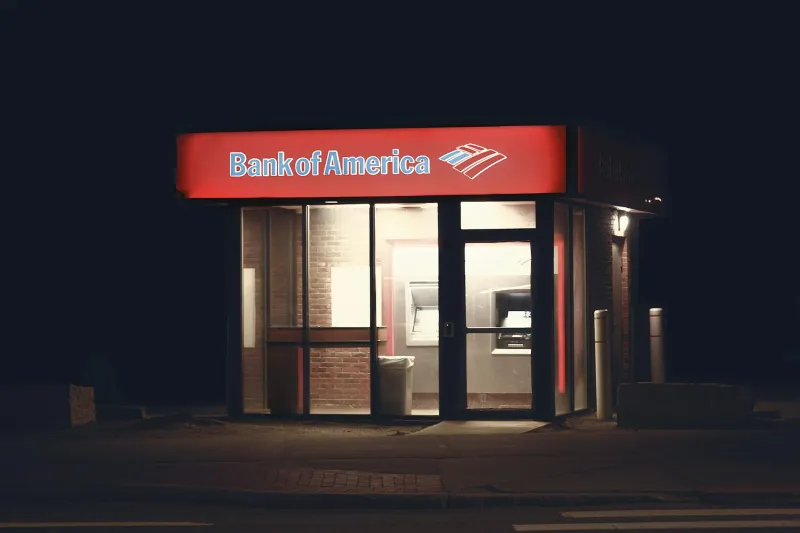
Sometime in the late 1990s, money began its vanishing act. First came ATMs that let you access cash without human interaction. Then online banking arrived, allowing you to move money around in your pajamas at 2 AM. Mobile banking apps turned your phone into a pocket-sized branch, complete with check deposits via camera and instant balance updates.
Today's banking experience would mystify your grandmother. You can open an account without leaving your couch, transfer money to strangers on the other side of the country, and pay for coffee with your watch. The average American handles physical cash so rarely that finding exact change feels like solving a puzzle.
The Human Cost of Convenience
We've traded relationship for efficiency, and mostly we're fine with that trade. Who wants to wait in line behind Mrs. Johnson while she slowly counts out her Social Security deposit in crumpled twenties? Modern banking is faster, more convenient, and available 24/7.
But something was lost in translation. Your bank used to be part of your community's fabric, woven into the social network that made neighborhoods feel like neighborhoods. The teller who knew your name has been replaced by an algorithm that knows your spending patterns better than you do.
When Money Had Weight
The most profound shift isn't just technological — it's psychological. Money used to have physical presence. You could hold it, count it, stuff it under your mattress if you didn't trust banks. A dollar bill was a promise you could fold and put in your pocket.
Now money is mostly conceptual, existing as magnetic patterns on computer servers owned by companies you'll never visit. We've become comfortable with the idea that our life savings are really just very sophisticated IOUs floating somewhere in the cloud.
The New Normal
Today's bank branches feel like museums — spacious, quiet, and slightly irrelevant. The few remaining tellers handle the transactions that can't be digitized: medallion signatures, cashier's checks, and helping elderly customers who still prefer human interaction over screen tapping.
Your smartphone knows your balance to the penny, tracks your spending habits, and can predict when you're about to overdraw your account. It's more convenient than Mrs. Henderson ever was, but it doesn't ask about your vacation or remember your birthday.
The little blue passbook has been replaced by push notifications and email alerts. We've gained efficiency and lost intimacy, traded ceremony for convenience. Whether that's progress or just change depends on how much you miss the weight of money in your hands and the comfort of being known by the person who guards it.