When Your Medical History Was Whatever You Could Remember at 3 AM
The Terrifying Reality of Paper Medicine
Picture this: You're rushed to the emergency room after a car accident, barely conscious. The doctor treating you has no idea you're allergic to penicillin. There's no computer to check, no digital alert to flash a warning. Your medical history exists only in filing cabinets scattered across different hospitals, clinics, and doctor's offices throughout the city—none of which are open at 2 AM on a Tuesday.
This wasn't some dystopian nightmare. This was American healthcare for most of the 20th century.
When Charts Were Actually Charts
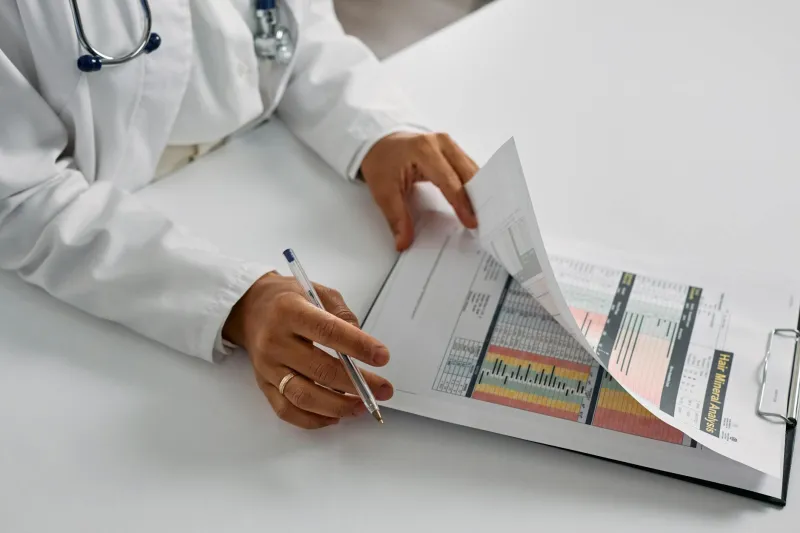
Before the digital revolution transformed medicine, your medical record was literally a manila folder stuffed with handwritten notes, lab results printed on paper, and X-rays hanging on light boards. If you moved to a new city, got a new doctor, or ended up at a different hospital, you were essentially a medical mystery all over again.
Nurses carried around clipboards with vital signs scribbled in pencil. Doctors wrote prescriptions by hand, often in notoriously illegible handwriting that pharmacists had to decode like ancient hieroglyphics. A simple medication error could happen because someone couldn't tell the difference between "15mg" and "150mg" in a physician's scrawl.
The system relied heavily on patients themselves to remember and communicate their medical histories. "Are you allergic to anything?" wasn't just a routine question—it was often the only thing standing between you and a potentially fatal reaction.
The Great Medical Guessing Game
When you visited a new doctor, the appointment began with you filling out forms by hand, trying to remember every surgery, every medication, every family history detail that might be relevant. Did your grandmother have heart disease or diabetes? When exactly did you have your appendix removed? What was the name of that medication you took for your back pain five years ago?
Doctors made decisions based on incomplete information because complete information simply didn't exist in any accessible form. Lab results from last month might be sitting in a different building. Your cardiologist's notes weren't available to your family doctor unless someone physically copied and mailed them.
This fragmented system created dangerous gaps. Patients received duplicate tests because results couldn't be found. Drug interactions went unnoticed because no single system tracked all medications. Specialists worked in isolation, treating symptoms without seeing the bigger picture.
The Human Filing System
Hospital staff became walking encyclopedias of patient information. Nurses memorized which patients in their ward were diabetic, who couldn't have certain medications, and whose family members needed updates. When shifts changed, critical information was passed along verbally or through hastily written notes.
Pharmacies kept index cards for regular customers, manually checking for drug interactions by flipping through reference books. Insurance claims were processed by hand, often taking weeks or months to resolve. Billing errors were common because everything relied on manual data entry and human memory.
The Digital Revolution Nobody Talks About
Today's healthcare system operates on a foundation of electronic health records (EHRs) that most patients never see but constantly benefit from. When you check into any hospital in America, your allergies, medications, and medical history can be accessed instantly. Drug interaction warnings pop up automatically when doctors prescribe medications. Lab results appear on screens within hours, not days.
Your smartphone probably knows more about your health than most doctors knew about their patients in 1985. Wearable devices track heart rates, sleep patterns, and activity levels continuously. Patient portals let you access test results, message your doctor, and manage appointments from your couch.
The transformation extends beyond individual care. Modern hospitals use predictive analytics to identify patients at risk for complications. Electronic prescribing has virtually eliminated medication errors caused by illegible handwriting. Automated alerts warn medical staff about everything from potential allergies to overdue medications.
The Invisible Safety Net
Most Americans have no idea how many medical errors the current system prevents daily. Electronic records flag dangerous drug combinations before they're prescribed. Digital monitoring systems alert nurses when vital signs indicate trouble. Automated reminders ensure patients receive time-sensitive medications.
The old system's failures were often invisible too—until they weren't. Patients died from preventable medication errors, delayed diagnoses, and communication breakdowns that would be nearly impossible today. The difference is that modern healthcare's successes are just as invisible as yesterday's failures were deadly.
What We Lost and Gained
The transition wasn't without costs. Healthcare became more expensive and complex. The personal touch of doctors who knew entire families gave way to specialists consulting computer screens. Medical training now requires as much technological literacy as clinical knowledge.
But the gains are undeniable. A patient today receives safer, more coordinated care than was possible in the paper era. Medical errors have dropped dramatically. Treatment decisions are based on comprehensive data rather than educated guesses and fragmented memories.
The Quiet Revolution
The shift from paper to digital healthcare represents one of the most significant safety improvements in modern American life, yet it's largely invisible to patients. We don't see the medication errors that don't happen, the allergic reactions that are prevented, or the diagnoses that are caught early because different doctors can finally talk to each other.
Next time you check into a hospital and they scan your wristband to confirm your identity and allergies, remember that this simple act represents a technological revolution that has saved countless lives. Your medical history no longer depends on what you can remember at 3 AM—it's right there in the system, protecting you even when you can't protect yourself.