When Your Broken TV Meant a House Call — Not a Trip to Best Buy
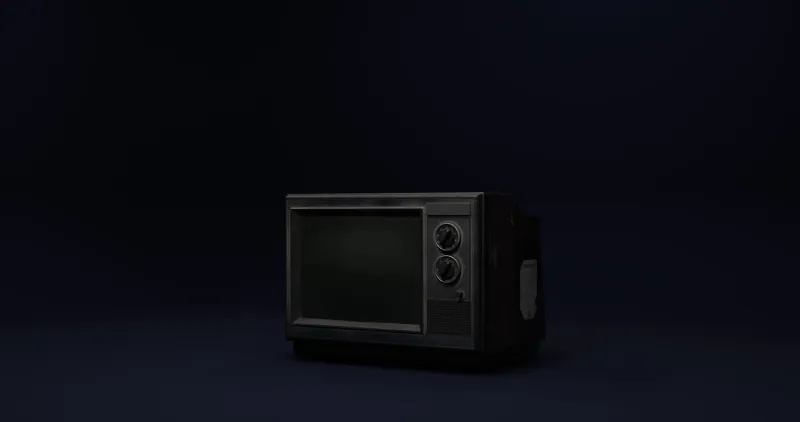
The Man with the Tube Tester
Every neighborhood had one. The TV repairman with his battered station wagon, loaded with vacuum tubes, soldering irons, and decades of accumulated wisdom about the inner workings of America's entertainment centerpieces. When your Zenith started showing wavy lines or your RCA went silent, you didn't drive to a store — you called Harold or Frank or whoever kept the televisions running in your corner of suburbia.
This wasn't just a service call. It was a relationship. These craftsmen knew your family's viewing habits, the quirks of your particular set, and exactly which tube was likely to fail next. They'd arrive at your door, diagnose the problem with practiced hands, and often fix it on the spot with parts pulled from their mobile workshop.
Built to Last, Designed to Repair
The televisions of the 1950s through 1980s were engineering marvels of a different philosophy. Manufacturers like Motorola, Admiral, and Magnavox built sets weighing 100 pounds or more, housed in real wood cabinets that doubled as living room furniture. These weren't disposable appliances — they were investments expected to serve families for decades.
Inside those hefty cabinets lay components designed for replacement. Vacuum tubes, the glowing heart of early television technology, were standardized across manufacturers. When one failed — and they regularly did — any competent repairman could swap it out. Circuit boards were spacious, with clearly labeled components and service manuals that actually helped technicians diagnose problems.
The average American family might own two or three television sets in their entire lifetime. A Philco console purchased for a wedding in 1962 would still be flickering to life for grandchildren in 1985, thanks to regular maintenance and the occasional house call.
The Economics of Expertise
TV repair wasn't just practical — it was profitable for everyone involved. A typical service call cost $15-25 in 1970s money, equivalent to about $100-150 today. Expensive, yes, but reasonable when weighed against a television's $400-800 purchase price (roughly $2,500-5,000 in today's dollars).
Repairmen could make decent middle-class livings. They invested in specialized equipment: tube testers that could diagnose failing components, oscilloscopes for tracking signal problems, and comprehensive parts inventories. Many operated from home workshops, building customer bases through word-of-mouth and Yellow Pages ads promising "Fast, Reliable Service."
Manufacturers supported this ecosystem. They published detailed service manuals, maintained parts inventories for decades-old models, and even operated training programs for independent repair shops. Fixing things wasn't an afterthought — it was integral to the business model.
When Cheaper Meant Disposable
The shift began in the 1990s with the rise of mass-produced electronics from overseas manufacturers. Suddenly, televisions weren't built in American factories by companies with century-long reputations. They were assembled in facilities optimized for volume and cost-cutting, not longevity.
Modern flat-screen TVs represent the ultimate expression of this philosophy. A 55-inch LED television that would have cost $10,000 in 1995 now sells for under $400. But this affordability comes with a catch: when something goes wrong, replacement often costs less than diagnosis.
Consider the math. A service call today runs $100-200 just to walk through your door. If the problem requires new parts — a failed backlight array, damaged main board, or cracked LCD panel — you're looking at $200-500 in additional costs. Meanwhile, a brand-new television with updated features sits on store shelves for $300.
The Vanishing Craftsman
This economic reality has decimated the repair industry. The Bureau of Labor Statistics tracked "electronic equipment installers and repairers" as a distinct occupation through the 1990s. Today, those jobs have largely vanished, absorbed into broader categories or eliminated entirely.
The few remaining TV repair shops survive by specializing in high-end equipment or vintage restoration. They're hobbyist destinations, not neighborhood necessities. The corner repair shop with hand-painted signs advertising "TV-Radio-Stereo Service" has joined the ranks of extinct American businesses alongside typewriter repair and film processing.
What We Lost in the Exchange
The disappearance of the TV repairman reflects broader changes in how Americans relate to their possessions. We've traded durability for affordability, craftsmanship for convenience. Our grandparents' generation expected to maintain and repair their belongings; we expect to replace them.
This shift has environmental consequences that weren't apparent in the throwaway culture's early days. Electronic waste now represents one of the fastest-growing waste streams globally, with Americans discarding 6.9 million tons of electronics annually.
But perhaps more significantly, we've lost something intangible: the satisfaction of restoration, the relationship with skilled craftspeople, and the simple pride that came from keeping things running. In a world of planned obsolescence and endless upgrades, the neighborhood TV repairman represents a different relationship with technology — one where things were built to last and people were paid to keep them working.
Today's 75-inch smart TV will likely outlive its software support long before its hardware fails. When it does, there won't be a repairman to call. There will just be another trip to the store.