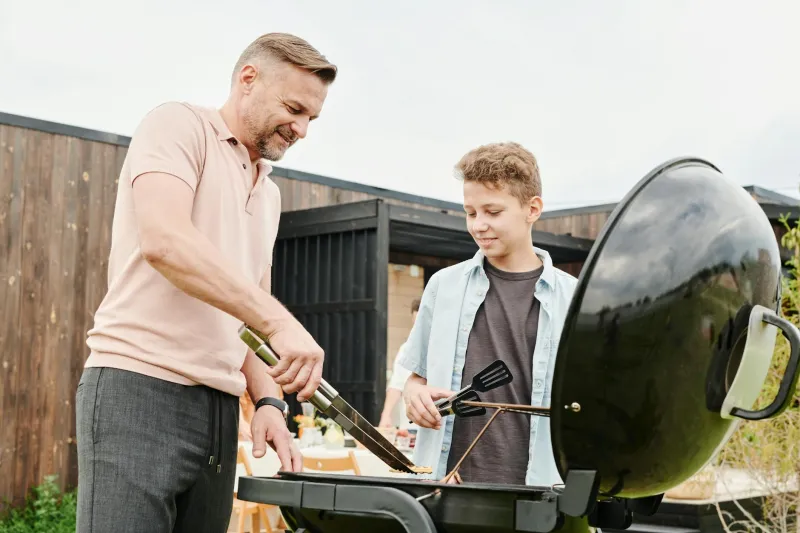
Your grandfather didn't "host a barbecue" — he engineered one. Every backyard cookout was a construction project that began weeks in advance and required skills that would impress today's YouTube DIY channels. Building the grill from scratch wasn't a Pinterest-worthy hobby project; it was simply how things were done when Weber was still just a surname and gas grills were science fiction.
Today's backyard entertaining looks more like a shopping expedition than a cooking adventure. We order pre-seasoned meat online, stream Spotify playlists curated by algorithms, and panic-buy forgotten items with same-day delivery. Somewhere between then and now, the backyard barbecue shifted from a test of ingenuity to an exercise in purchasing power.
The Cinderblock Chronicles
In the post-war suburbs of America, every serious backyard cook was part contractor, part chef. The standard barbecue setup required a trip to the hardware store for cinderblocks, a metal grate (often salvaged from old refrigerators), and bags of charcoal that came without convenient self-lighting chemicals.
Building the grill was a neighborhood event. Men would gather around piles of cinderblocks, debating optimal height and airflow like they were designing the space program. The finished product was usually a rectangular fortress that looked more like a small bunker than a cooking appliance, but it worked — and more importantly, you built it yourself.
These weren't temporary structures, either. Families would construct elaborate outdoor cooking areas that became permanent fixtures of their backyards. Some featured multiple levels for different types of cooking, built-in side tables made from more cinderblocks, and carefully calculated wind guards to manage the charcoal fire.
When Everything Was Made From Scratch
The food preparation for a 1960s barbecue would exhaust today's party hosts. There were no pre-made potato salad containers from the deli counter, no bags of pre-cut vegetables, and certainly no pre-marinated meats. Every dish started with raw ingredients and ended with genuine accomplishment.
Potato salad meant peeling and boiling potatoes, hard-boiling eggs, and mixing mayonnaise by hand (because Miracle Whip was still a luxury item in many households). Coleslaw required shredding cabbage with a knife — food processors wouldn't become common until the 1980s. Even the hamburger patties were formed by hand from ground beef bought from a actual butcher who knew your family's preferences.
Many families grew their own vegetables specifically for summer entertaining. Backyard gardens weren't lifestyle statements; they were practical necessities that provided fresh tomatoes, lettuce, and herbs for cookouts. The salad wasn't just made from scratch — it was grown from scratch, too.
The Art of Fire Management
Starting the fire was a skill passed down through generations like family recipes. There were no lighter fluid squeeze bottles, no instant-light charcoal, and definitely no gas valves to turn for instant flames. Building a proper cooking fire required understanding airflow, charcoal arrangement, and the delicate timing of when coals were ready for cooking.
Dads would spend thirty minutes carefully arranging charcoal, using newspaper and kindling to create the perfect base fire. The process required patience, skill, and often a few colorful words when the wind shifted at the wrong moment. Kids learned fire management by watching and occasionally being trusted with the bellows or fan duty.
Temperature control meant moving food to different areas of the grill, adjusting the height of the cooking grate, or adding more charcoal to maintain heat. There were no built-in thermometers, digital readouts, or smartphone apps to monitor cooking temperatures. Success came from experience, intuition, and the willingness to occasionally serve slightly charred hamburgers.
The Social Architecture of DIY Entertaining
Backyard cookouts in this era were genuinely collaborative events. Guests didn't just show up expecting to be fed; they participated in the cooking process. Men would gather around the grill, offering advice and taking turns manning the spatula. Women would coordinate side dishes, often bringing ingredients to prepare on-site rather than arriving with finished contributions.
Children had actual jobs beyond just "staying out of the way." They hauled charcoal, fetched tools, and learned cooking skills through hands-on participation. The backyard cookout was an educational experience disguised as entertainment.
Neighbors would wander over, drawn by the smoke and the promise of good food. These gatherings weren't scheduled through Facebook events or coordinated via group texts — they happened organically when people saw and smelled evidence of outdoor cooking.
When Entertainment Meant Making Your Own Fun
The soundtrack to these gatherings wasn't curated by algorithms or streaming services. Someone would drag a radio outside, tune it to the local station, and accept whatever music the DJ decided to play. More often, entertainment came from conversation, lawn games that required no batteries, and the simple pleasure of watching food cook over an open fire.
Games were improvised from available materials: horseshoes made from actual horseshoes, badminton with nets strung between trees, and water balloon fights using balloons that had to be tied by hand because self-sealing varieties didn't exist yet. The backyard itself provided the entertainment infrastructure.
The Economics of Effort
What made this elaborate DIY approach possible was an economy where time was more available than money for many families. Spending Saturday afternoon building a grill and preparing food from scratch wasn't seen as inefficient — it was seen as smart economics and satisfying work.
Families invested in tools and skills rather than convenience products because the tools lasted decades and the skills improved with practice. A good set of grilling equipment, properly maintained, could serve a family for twenty years or more. The initial effort paid dividends in countless future cookouts.
The Convenience Revolution
The transformation began gradually in the 1980s with the introduction of gas grills, pre-made foods, and the general acceleration of American life. Suddenly, the elaborate construction projects and hours of food preparation seemed unnecessarily complicated when you could achieve similar results with less effort.
The rise of big-box stores and national food chains standardized backyard entertaining. Why build a grill when you could buy a better one? Why make potato salad when the deli version was perfectly acceptable? The DIY approach began to look like unnecessary work rather than satisfying accomplishment.
What We Gained and Lost
Modern backyard entertaining is undeniably more convenient and often produces better, more consistent results. Today's gas grills offer precise temperature control, pre-seasoned meats ensure flavor success, and the variety of available foods would amaze our cinderblock-building ancestors.
But we've also lost something harder to quantify: the deep satisfaction of creating something entirely from scratch, the problem-solving skills developed through hands-on construction, and the genuine collaboration that happened when everyone had to pitch in to make the event successful.
Today's cookouts often feel more like outdoor dining experiences than collaborative adventures. The host does most of the work in advance, guests arrive expecting a finished product, and the focus shifts from the process of cooking together to the consumption of prepared food.
The New DIY Movement
Interestingly, some modern cooks are rediscovering the appeal of building their own outdoor cooking equipment. YouTube is full of videos showing how to construct elaborate smokers, pizza ovens, and custom grills. The difference is that this new DIY movement is often driven by hobby interest rather than necessity.
Farmers' markets and local food movements have also brought back some appreciation for starting with raw, local ingredients rather than processed convenience foods. Some families are rediscovering the satisfaction of growing vegetables specifically for summer entertaining.
More Than Just Cooking
The evolution of backyard entertaining reflects broader changes in how Americans approach leisure time, community building, and the relationship between effort and satisfaction. We've gained efficiency and convenience but lost some of the collaborative problem-solving and genuine skill-building that made those cinderblock cookouts memorable.
Next time you fire up your gas grill and unwrap pre-marinated steaks, take a moment to appreciate the engineering feat that your grandfather would have considered routine. Those backyard barbecues weren't just about the food — they were about the quiet pride of building something with your own hands and sharing the results with people you cared about.
Maybe it's time to bring back a little of that DIY spirit, even if we keep the convenience of modern tools. After all, the best conversations still happen around fires that someone had to actually build.