Picture this: It's 1975, and at exactly noon, entire office buildings empty out like someone pulled a fire alarm. Workers stream onto sidewalks, heading to diners, cafeterias, or even home for a proper meal. The phones stop ringing. The typewriters fall silent. For one blessed hour, America takes a collective breath.
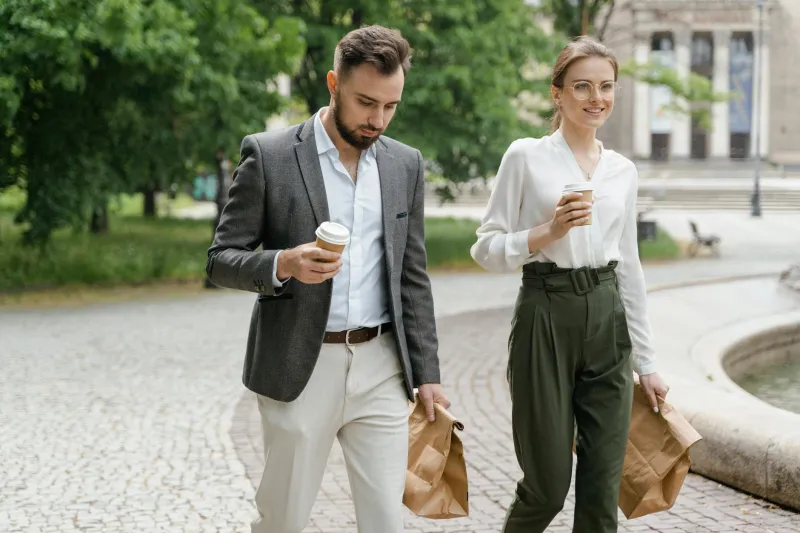
Fast-forward to today, and that same office building hums with the soft glow of computer screens illuminating faces hunched over wilted salads and lukewarm soup containers. The lunch "hour" has become the lunch "whenever you can squeeze it in," often accompanied by the gentle tap-tap-tap of keyboards and the ping of incoming Slack messages.
When Lunch Was Actually Sacred
The traditional American lunch break wasn't just about food — it was a cultural institution. From the 1940s through the 1980s, most workplaces observed what felt like a sacred ritual: everyone stopped working at the same time, left the building, and didn't return for a full hour.
This wasn't just corporate policy; it was social expectation. Restaurants near office districts built their entire business models around the noon rush. Diners would have their "lunch counter" ready, complete with rotating stools and friendly waitresses who knew your usual order. Department stores opened employee cafeterias that served hot meals on actual plates with real silverware.
Even blue-collar workers participated in this daily exodus. Construction sites would go quiet as workers gathered around lunch trucks or sat on park benches with metal lunch boxes packed by spouses that morning. The lunch whistle wasn't just a signal — it was a promise that the next hour belonged to you, not your employer.
The Economics of Actually Stopping
What made this possible was an economy that could afford to stop. Post-war America operated on the assumption that productivity came from well-rested, well-fed workers who returned to their tasks refreshed. Companies invested in employee cafeterias not as cost centers, but as productivity enhancers.
Unions fought hard for lunch breaks, viewing them as fundamental worker rights alongside fair wages and safe working conditions. The lunch hour was written into contracts, protected by law, and defended as fiercely as overtime pay. It represented something deeper than just eating — it was proof that workers were human beings, not just productivity units.
Businesses, too, embraced the lunch break because it made financial sense. Happy employees stayed longer, worked harder, and created the kind of workplace loyalty that kept companies running smoothly for decades.
When Everything Changed
The shift began subtly in the 1990s with the rise of "flexible" work arrangements and the always-on culture enabled by email and cell phones. Suddenly, being available during lunch became a sign of dedication rather than an invasion of personal time.
The 2008 financial crisis accelerated this transformation. Companies downsized, workloads increased, and taking a full lunch break began to feel like a luxury that ambitious employees couldn't afford. The rise of food delivery apps made it easier than ever to eat at your desk, while open office designs eliminated private spaces where you might escape work conversations.
Today's gig economy has completed the transformation. When you're paid per project or competing for the next contract, every minute away from work feels like lost income. The lunch break has become another casualty of the hustle culture that promises success to those willing to sacrifice everything for productivity.
What We Lost When We Stopped Leaving
The disappearance of the lunch break represents more than just a scheduling change — it's a fundamental shift in how we view work-life balance. Those midday escapes provided crucial mental breaks that research now shows are essential for creativity, problem-solving, and overall job satisfaction.
We also lost something social. Lunch breaks created natural opportunities for workplace friendships, mentoring relationships, and the kind of informal conversations that often led to breakthrough ideas. Today's isolated desk dining eliminates these chance encounters that once made work more human.
Perhaps most importantly, we lost the simple pleasure of eating without multitasking. There was something civilized about sitting down with a proper meal, focusing on flavors and conversation, and returning to work genuinely refreshed rather than just slightly less hungry.
The Quiet Rebellion
Interestingly, some companies are rediscovering the value of protected lunch time. Google's famous cafeterias aren't just perks — they're strategic investments in employee wellbeing and collaboration. European companies, which never fully abandoned the lunch break tradition, consistently rank higher in employee satisfaction and work-life balance surveys.
The pandemic also sparked some reflection about work-life boundaries, with some remote workers rediscovering the joy of actually stepping away from their computers for a real meal break.
More Than Just a Meal
The transformation of lunch from a protected break to an optional interruption reflects our broader relationship with work and time. We've gained efficiency and flexibility, but we've lost something harder to quantify — the simple recognition that human beings need regular pauses to remain human.
Next time you're eating a sad desk salad while responding to emails, remember that there was once a time when lunch meant something different. It meant acknowledging that some things — conversation, digestion, a moment of peace — were more important than whatever was waiting in your inbox.
Maybe it's time to bring back the lunch break. Your productivity might actually thank you.