Forty-Three Photos From the Whole Summer — And Every One of Them Counted
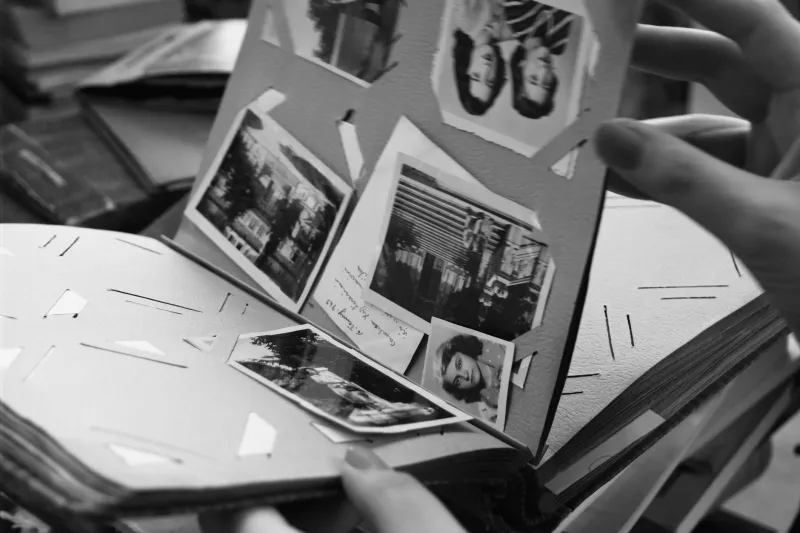
Somewhere in a lot of American living rooms, there's a photo album. Maybe it's on a shelf. Maybe it's in a box in the closet. It probably has a padded cover — burgundy or navy — with little plastic sleeves holding pictures that have gone slightly yellow at the edges. If you open it, you'll find maybe sixty photographs covering an entire year of someone's life. A birthday party. A beach trip. A Christmas morning. A kid's first day of school.
Every single photo was chosen. Every one was printed, handled, and placed there deliberately.
Now pull out your phone. How many photos do you have on it right now?
The Economics of Scarcity
Before digital cameras became standard — roughly before the mid-2000s for most American households — taking a photograph was an act with real stakes attached to it. Film came in rolls of 24 or 36 exposures. Developing that film cost money. Getting doubles cost more. If you were on vacation, you might have packed two or three rolls for the whole trip, which meant you had maybe 72 shots to document a week in a place you might never visit again.
That scarcity made people deliberate. You didn't snap a dozen near-identical shots of your kid blowing out birthday candles hoping one would turn out. You waited until the moment felt right, held the camera steady, and committed. Then you waited — sometimes weeks — to find out whether the photo was any good. By the time the prints came back from the drugstore, you'd already half-forgotten what you were trying to capture.
That waiting period was itself a kind of ritual. Picking up the envelope of developed photos, flipping through them in the car before you'd even left the parking lot — it was a small event. The bad ones were a little disappointing. The good ones felt like genuine discoveries.
The Album as Narrative
What people did with those photos matters as much as how they took them. The printed photo album wasn't just storage — it was storytelling. Someone sat down, sorted through the pictures, decided which ones were worth keeping and which belonged in the trash, and arranged the survivors into a sequence that told a story. Grandma's visit came before the Fourth of July. The beach trip got its own section. The album had a shape.
That curation was a form of meaning-making. Deciding what to include and what to leave out is how we construct memory, how we decide which moments were the ones that mattered. The album said: this is what our family was like. This is what we did. This is what we looked like.
Kids grew up looking at those albums, learning the family's self-narrative from the images their parents chose to preserve. Grandparents showed them to grandchildren. They got passed down. Some of them still exist, sitting in attics, outlasting the people in them by decades.
Ten Thousand Photos and Nothing to Show
The average iPhone user today has somewhere between 2,000 and 10,000 photos on their device. Add in cloud backups, old phone transfers, and a few years of social media, and many people are looking at photo libraries with tens of thousands of images. A recent study found that 80% of digital photos are never looked at again after they're taken.
Eighty percent. Never looked at again.
The friction is gone, and with it went the intentionality. We photograph everything now — meals, receipts, parking spot numbers, the funny sign on the highway, the sunset that looked better in person. We photograph moments before we've fully experienced them. We take seventeen shots of the same thing and never go back to choose the best one. The photos pile up in algorithmic folders that sort themselves by date and location, and we interact with them mostly when the app surfaces a memory notification: Three years ago today.
That notification does the curation for us. We don't choose which moments to remember. A machine decides which ones to surface, based on what its models think we'll respond to. Smiling faces. Recognizable landmarks. High-contrast lighting.
What Accessibility Cost Us
None of this is a simple tragedy. Digital photography democratized image-making in profound ways. Families who couldn't afford film and developing costs now have full visual records of their kids' childhoods. Moments that would have been lost — because nobody had a camera handy — now get captured on phones that are always in someone's pocket. The sheer volume means that somewhere in the pile, there's almost certainly a perfect shot.
And yet. The album on the coffee table was an artifact. It had weight. You could hand it to someone. It didn't require a password or a charging cable. It didn't disappear when a company went bankrupt or a hard drive failed. It existed in the physical world, which is where memory actually lives for most people.
There's a reason printed photo books have seen a quiet resurgence — services like Artifact Uprising and Chatbooks have built real businesses on the idea that people want something tangible again. They have more images than ever and feel, somehow, like they're remembering less.
The shift from scarcity to abundance changed what a photograph means. It used to mean: this moment was worth one of my 36 shots. Now it means almost nothing, because the cost of taking it was nothing. And when something costs nothing, it's very hard to make it feel precious.
Maybe that's the real loss — not the prints themselves, but the discipline of choosing. The habit of saying, this one. This is the one that matters.