Calling Long Distance Used to Be an Event the Whole Family Prepared For
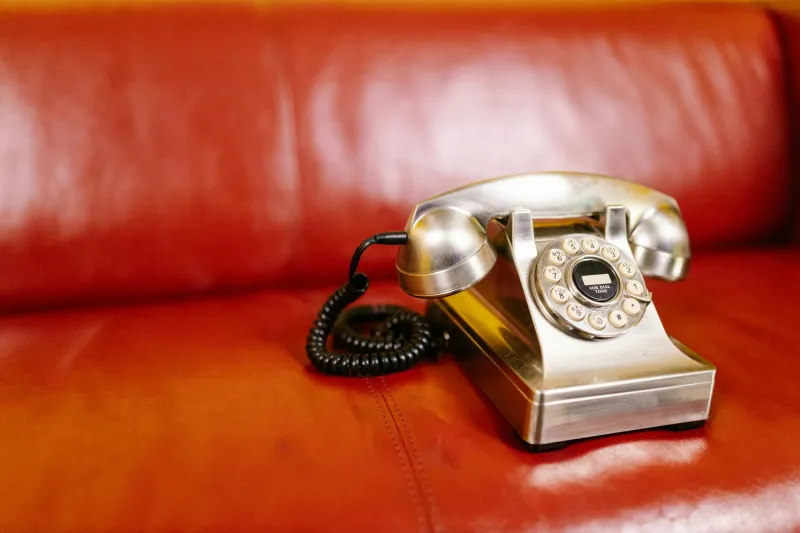
Calling Long Distance Used to Be an Event the Whole Family Prepared For
Somewhere in a lot of American households, there was an unspoken rule: long-distance calls were for emergencies, holidays, and news that couldn't wait for a letter. You didn't just pick up the phone and chat. You thought about what you needed to say, you kept one eye on the clock, and when you hung up, you felt the financial weight of it in a way that's almost impossible to explain to anyone who grew up with a smartphone.
The story of how phone calls went from rare, expensive rituals to something you do for free while folding laundry is one of the most quietly dramatic shifts of the last century — and it says a lot about how we experience distance, connection, and the people we love.
The Operator Era: When a Human Placed Your Call
In the early decades of telephone use, making any call — local or long-distance — required going through a human operator. You picked up the receiver, waited for someone to answer, and told them who you were trying to reach. For long-distance calls, the process could involve multiple operators in multiple cities, each patching the connection through manually.
It was slow, it was unreliable, and it was extraordinarily expensive. In the 1910s and 1920s, a three-minute long-distance call between cities could cost the equivalent of a full day's wages for an average worker — sometimes more. Families who had telephones at all used them sparingly, and long-distance was reserved for genuine urgency: a death in the family, a medical emergency, news that simply couldn't travel by mail fast enough.
The telephone was a luxury, and long-distance was a luxury within that luxury.
Rates Drop — But 'Affordable' Is Relative
Through the mid-20th century, the Bell System — AT&T's near-monopoly on American telephone infrastructure — gradually expanded the network and brought costs down. Automatic dialing replaced operator connections for most calls. Coaxial cables and eventually microwave relay towers improved the quality and capacity of long-distance lines.
By the 1950s and 1960s, long-distance calling had become more accessible, but it was still a considered expense. AT&T ran advertising campaigns explicitly encouraging Americans to "reach out and touch someone" — not because calling was natural and easy, but because the company was actively trying to convince people it was worth the money.
The rates were tiered by time of day, with evenings and weekends cheaper than business hours. Families developed habits around this. Sunday evenings were a popular time to call relatives — rates dropped after 5 p.m., and it felt like a reasonable weekly splurge. You'd gather around the kitchen phone, pass the receiver around, keep the conversation focused, and hang up after a few minutes with the quiet satisfaction of having stayed connected despite the distance.
A three-minute coast-to-coast call in 1960 still cost around $3 in the money of the time — roughly $30 in today's terms. People made those calls count.
Deregulation and the Price Wars
The real transformation in long-distance pricing came with the breakup of AT&T in 1984, when a landmark antitrust ruling shattered the Bell System and opened the market to competition. MCI and Sprint emerged as serious rivals, and the price wars that followed drove long-distance rates down dramatically through the late 1980s and 1990s.
By the mid-1990s, long-distance calls had dropped to around 10 cents a minute for many plans — still a cost you tracked, but no longer an event you planned around. Calling cards let travelers and college students make calls without worrying about billing at home. The emotional weight of the long-distance call began to lift.
Then came the internet, and the floor fell out entirely.
Free, Forever, From Anywhere
VoIP technology — voice transmitted over internet data connections rather than traditional phone lines — began disrupting the market in the early 2000s. Skype launched in 2003 and made computer-to-computer calls free anywhere on earth. The concept seemed almost too good to be true to anyone who'd grown up watching the clock during a long-distance call.
Smartphone data plans absorbed voice calls into the same unlimited packages people were already paying for. FaceTime launched in 2010. WhatsApp, Google Meet, Zoom — the options multiplied, the cost collapsed to zero, and the idea of a long-distance call as a budgeted, planned event became a relic of a world that had vanished faster than most people noticed.
Today, a video call to a relative in another country — not just another state, but another country — costs nothing and requires no planning. You can call on a whim, mid-errand, just to show someone a funny thing you're looking at. The intimacy of physical presence hasn't been replicated, but the barrier of distance has been effectively eliminated.
What Distance Used to Mean
There's something worth sitting with in that history. When calling someone was expensive and logistically involved, the call itself carried weight. You saved up things to say. You thought about the other person before you dialed. The rarity made it meaningful in a way that constant, frictionless contact can't quite match.
This isn't an argument for going back. Cheaper, easier communication has kept families closer across geographic separation, sustained friendships that distance would otherwise have ended, and connected communities in ways that have genuinely improved lives.
But the Sunday evening phone ritual — the whole family gathered around the kitchen phone, the receiver passed from hand to hand, the careful goodbyes — was its own kind of intimacy. It was shaped by limitation, and that limitation gave it a quality that free unlimited calling quietly replaced with something different.
The distance didn't just measure miles. It measured how much you were willing to spend to close it.