When American Highways Were Full of Mystery and Mom-and-Pop Discoveries
When American Highways Were Full of Mystery and Mom-and-Pop Discoveries
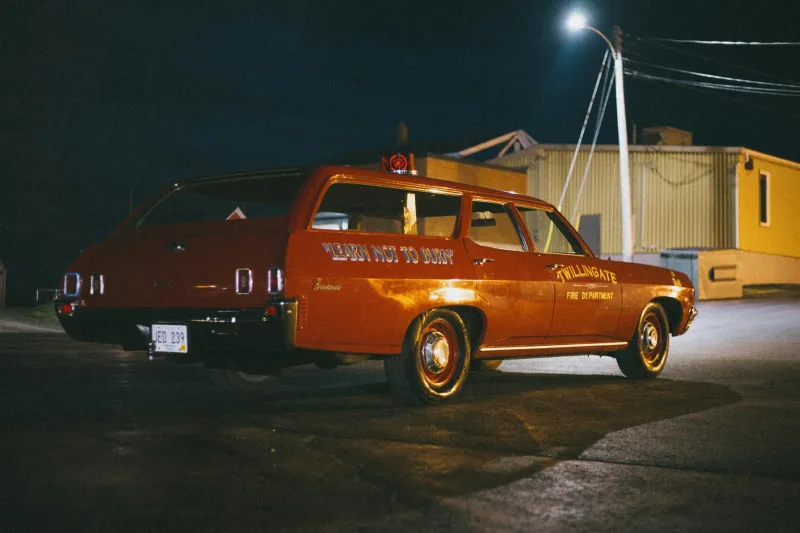
Picture this: It's 1975, and your family is loading up the station wagon for a cross-country drive to visit relatives in Colorado. Your dad unfolds a massive Rand McNally atlas across the kitchen table, tracing routes with his finger while your mom packs a cooler with sandwiches and thermoses of coffee. There's no way to know what restaurants you'll find along the way, no reviews to read, no photos to preview. You're about to embark on a genuine adventure where every meal stop is a roll of the dice.
This was the golden age of American road trips—an era when hitting the highway meant surrendering to uncertainty and discovering the country one mile marker at a time.
The Art of Navigation by Instinct
Before GPS satellites began dictating our every turn, American families navigated using a combination of paper maps, roadside signs, and pure instinct. The ritual began before you even left the driveway: spreading that enormous folded map across the hood of the car, plotting your primary route with a highlighter, and identifying backup roads in case of construction or wrong turns.
Fathers became amateur cartographers, studying elevation changes and calculating driving times based on experience rather than algorithms. "We'll take Route 50 through Kansas," Dad would announce with the confidence of Magellan, even though he'd never driven it before. Getting lost wasn't a failure—it was an inevitable part of the journey that often led to the trip's most memorable moments.
Compare this to today's travel experience, where Google Maps provides turn-by-turn directions, real-time traffic updates, and alternate routes calculated to the minute. Modern families can predict their arrival time within a few minutes and know exactly where they'll stop for gas, food, and bathroom breaks before they even start the engine.
Roadside Roulette: The Diner Discovery Era
Perhaps nowhere was the element of chance more pronounced than in choosing where to eat. Without Yelp reviews, TripAdvisor ratings, or even basic online menus, families relied on a primitive but surprisingly effective system: roadside intuition.
A busy parking lot usually meant good food. A neon sign that had seen better days might indicate a hidden gem or a stomach ache waiting to happen. Truck stops were generally safe bets—if the big rigs were parked there, the coffee was probably decent and the portions generous. Local diners with names like "Mabel's" or "The Blue Moon Cafe" promised authentic regional cuisine, though you never knew if that meant the best pie in three states or a grease-soaked disappointment.
Families developed their own road trip folklore around these discoveries. "Remember that little place in Nebraska where the waitress called everyone 'honey' and the pancakes were bigger than the plates?" These random encounters with small-town America became the stories retold at family gatherings for decades.
Today's road trippers can preview restaurant menus, read hundreds of reviews, and even see photos of the bathrooms before deciding where to stop. Apps like Roadtrippers and GasBuddy eliminate the guesswork entirely, routing travelers to highly-rated establishments with predictable quality and familiar franchises.
The Beautiful Uncertainty of Wrong Turns
Getting lost in the pre-GPS era was both frustrating and liberating. A missed exit might add hours to your journey, but it could also lead you through small towns you never would have discovered otherwise. Suddenly you're driving down Main Street in some forgotten corner of America, past vintage gas stations, local hardware stores, and diners that time forgot.
These unplanned detours often became the highlight of the trip. Maybe you'd stumble across a roadside attraction like the World's Largest Ball of Twine or a scenic overlook that didn't appear on any tourist map. Children learned patience and flexibility as parents consulted paper maps at gas stations, asked locals for directions, and occasionally admitted they had no idea where they were.
Modern GPS has virtually eliminated the wrong turn. When we do deviate from the prescribed route, a calm voice immediately begins "recalculating," guiding us back to the optimal path. We've gained efficiency and reduced stress, but we've also lost those serendipitous discoveries that came from being genuinely, helplessly lost.
The Social Fabric of Road Trip Help
Without smartphones to provide instant answers, travelers had to rely on human interaction. Gas station attendants didn't just pump fuel—they served as local ambassadors, offering directions, restaurant recommendations, and warnings about road construction ahead. Motel clerks became temporary tour guides, suggesting scenic routes and hidden attractions.
These interactions created micro-connections across the American landscape. Travelers and locals engaged in brief but meaningful exchanges that humanized the journey. You might learn about a family diner from a mechanic in Oklahoma or discover a scenic shortcut from a fellow traveler at a rest stop.
Today's road trips are increasingly solitary experiences. We interact with apps rather than people, consulting online reviews instead of asking locals for advice. While we've gained access to vastly more information, we've lost those spontaneous human connections that once made road trips feel like journeys through a living, breathing country rather than a series of optimized waypoints.
What We've Gained and Lost
Modern road trips are undeniably more efficient, safer, and predictable. Families can plan their entire journey in advance, avoid traffic jams, find clean restrooms, and eat at restaurants with known quantities. Children can be entertained by tablets and smartphones instead of playing license plate games or counting red cars.
But something ineffable has been lost in our optimization of the American road trip. The element of surprise, the need for resourcefulness, and the simple pleasure of discovering something unexpected have largely disappeared from our highways.
The old way wasn't necessarily better—getting lost with cranky children and a limited budget was often more stressful than magical. But it was undeniably different, requiring a kind of courage and curiosity that modern technology has made largely unnecessary.
As we navigate America's highways with increasing precision and predictability, it's worth remembering that some of our most cherished travel memories came not from perfectly planned itineraries, but from those moments when we had absolutely no idea where we were going—and discovered something wonderful along the way.